




The complicated founder of Guelph
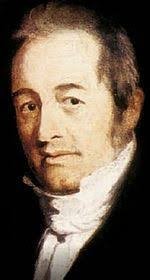
John Galt wasn’t just “the guy who founded Guelph.” He was a restless, ambitious, often-overextended Scottish novelist and colonial promoter whose life swung between big ideas, financial trouble, and physical decline. His story is messy, human, and deeply tied to how Guelph came to exist at all. The Canadian Encyclopedia Britannica
Early life in Scotland
Birth and family
- Born: May 2, 1779, in Irvine, Ayrshire, Scotland
- His father was a naval officer involved in West Indies trade—so from the start, Galt’s world was tied to ships, commerce, and the wider empire. guelphheritage.ca Britannica
Education and early ambitions
Galt began studying law in 1809, but he was never just one thing. He drifted toward writing, business schemes, and travel. He moved to London, wrote essays and stories for journals, and tried to make a living as a man of letters—never quite secure, always hustling. guelphheritage.ca Britannica
The writer before the colonizer
Before Canada ever entered the picture, Galt was known as a novelist.
- He wrote about Scottish rural life, local characters, and small communities with a realism that later critics said anticipated the “kailyard” school of fiction.
- His best‑known works include:
- The Ayrshire Legatees (1820)
- The Annals of the Parish (1821)
- Sir Andrew Wylie (1822)
- The Provost (1822)
- The Entail (1823)
- Lawrie Todd (1830), which drew on his Canadian experiences and imagined the life of a settler. Britannica
He also moved in interesting circles. While travelling on commercial business in the Mediterranean, he met Lord Byron, travelled with him to Malta and Athens, and later wrote one of the early biographies of Byron, Life of Lord Byron (1830). Britannica guelphheritage.ca
So when Galt eventually turned up in Upper Canada, he wasn’t some anonymous bureaucrat—he was a published author with a taste for drama, narrative, and big ideas.
How he ended up in Canada
After the War of 1812, there were many British subjects claiming losses in Canada. Galt became involved as an agent for claimants, which pulled him into Canadian affairs. That work, plus his talent for promotion and writing, led him into the orbit of a new project: the Canada Company. The Canadian Encyclopedia Wikipedia
In 1824, he was appointed Secretary to the Board of Directors of the Canada Company in London. By 1826, he was sent to Upper Canada as the company’s first superintendent, with a huge mandate: turn millions of acres of Crown and clergy reserve land into a functioning, profitable, settled region. The Canadian Encyclopedia Guelph Museums Wikipedia
The Canada Company and the vision for Guelph
The Canada Company, chartered in 1825 and incorporated in 1826, was a private land development company designed to colonize a massive swath of Upper Canada—especially the Huron Tract near Lake Huron. It bought about 2.5 million acres from the Crown, land that had been taken from Indigenous nations, including the Mississaugas of the Credit. Guelph Museums Wikipedia
Galt’s job was not small:
- Survey the land
- Build roads, mills, and basic infrastructure
- Attract settlers
- Turn wilderness into a functioning colonial economy
He believed in the power of planned towns—settlements laid out in advance, with streets, public squares, and facilities designed to impress and attract. For the company’s headquarters, he chose a site on the Speed River and conceived what would become Guelph. Guelph Museums Wikipedia
Founding Guelph: theatre, ambition, and conflict
On April 23, 1827, John Galt formally founded the town of Guelph. He chose the name to honour the British royal family, the Hanoverians, whose ancestral line included the Guelf (Guelph) dynasty—hence Guelph’s later title, “The Royal City.” Guelph Museums Wikipedia
The plan
- Galt laid out Guelph as a planned town, with streets radiating from a central point.
- That radiating pattern is still visible in downtown Guelph today. Guelph Museums
He also co‑founded Goderich on Lake Huron with Dr. William “Tiger” Dunlop, another key Canada Company figure. Guelph Museums guelphheritage.ca
The conflict
For all his vision, Galt was not a careful, conservative administrator. He spent money, made decisions on the ground, and often acted faster than the London directors liked.
- He clashed repeatedly with the company’s board over finances, control, and reporting.
- They accused him of mismanagement; he felt they didn’t understand the realities of building a colony from scratch. The Canadian Encyclopedia Wikipedia
By 1829, the relationship had broken down. Galt was recalled to Britain, removed from his position, and effectively blamed for the company’s financial and administrative troubles. The Canadian Encyclopedia Guelph Museums Wikipedia
The cost: ruin, illness, and return to writing
When Galt returned to Britain, he was not a triumphant colonial founder. He was:
- In financial difficulty
- In poor health
- Out of favour with powerful men in London
One source describes him as returning “practically a ruined man.” Britannica The Canadian Encyclopedia
He spent his remaining years largely back in the world he started from—writing. He produced:
- His Autobiography (1833)
- The Literary Life and Miscellanies (1834)
- Additional fiction, including works that drew on his Canadian experiences, like Lawrie Todd and Bogle Corbet, which explored the lives of emigrants and settlers. The Canadian Encyclopedia Britannica
But his health continued to decline. He suffered from chronic illness, including paralysis in his later years.
Death: April 11, 1839, in Greenock, Scotland, at age 59. The Canadian Encyclopedia Britannica
How history remembers him
John Galt sits in an odd place historically:
- In Canada, he’s remembered as the founder of Guelph and a key figure in the Canada Company’s colonization of the Huron Tract. The town of Galt (now part of Cambridge) was named after him. The Canadian Encyclopedia Wikipedia
- In Scotland and literary history, he’s better known as a novelist who captured the texture of Scottish rural life with humour and realism. Britannica guelphheritage.ca
His Canadian writings are a smaller part of his literary legacy, but his Autobiography includes a vivid, self‑serving, but invaluable account of founding Guelph—complete with the famous story of felling a tree to mark the town’s beginning. guelphheritage.ca Guelph Museums
The deeper truth: vision and damage
If you dig beneath the heroic “founder” story, you hit harder ground.
- Galt’s work with the Canada Company helped drive what one historian called “the most important single attempt at settlement in Canadian history.” Wikipedia
- That same process meant the dispossession of Indigenous peoples, including the Mississaugas of the Credit and other Anishinaabek nations, whose lands were turned into surveyed lots, farms, and towns like Guelph. Guelph Museums Wikipedia
So who was John Galt?
- A restless Scottish writer with a gift for character and place
- A colonial promoter who believed in planned towns and bold schemes
- A man who founded Guelph, then was pushed out and died in relative obscurity and ill health
- A figure whose legacy is tied both to the building of communities and to the structures of dispossession that made that building possible
For a city like Guelph, remembering John Galt honestly means holding all of that at once: the vision, the flaws, the ambition, the damage, and the very real streets and lives that grew out of his short, turbulent time in Upper Canada.
If you want, next we can do a companion piece: “Myth vs. Reality: The Founding of Guelph,” where we separate the romantic stories from what the records actually show.