The Restless Visionary Who Imagined a City in the Wilderness
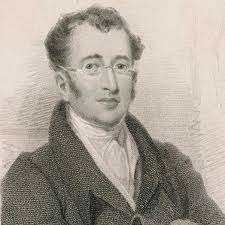
John Galt’s life reads like a collision of ambition, imagination, controversy, and relentless motion. Long before he ever set foot in Upper Canada, he had already lived several lives — novelist, traveller, entrepreneur, political commentator, and dreamer. By the time he founded Guelph in 1827, he was not simply laying out streets: he was imprinting his personality on the landscape of a young colony.
Early Life in Scotland (1779–1804)
John Galt was born on May 2, 1779, in the busy port town of Irvine, Ayrshire, a place shaped by ships, trade, and the constant movement of goods and ideas. His father, a shipmaster involved in West Indies commerce, exposed young John to the rhythms of global trade. His mother, Agnes Galt, was known for her intelligence and strong will — traits her son inherited in full.
Galt was not a prodigy in the traditional sense. He disliked rigid schooling but devoured books, especially history, travel accounts, and poetry. He apprenticed as a clerk in Greenock, then attempted law studies in Edinburgh, but neither path held him. What he wanted was a life that mixed words, travel, and enterprise.
The Writer Emerges (1804–1819)
By his mid‑20s, Galt had committed himself to writing. He produced essays, poems, and eventually novels, becoming one of the earliest authors to portray Scottish rural life with realism and humour. His works — including The Ayrshire Legatees and Annals of the Parish — earned him a reputation as a keen observer of ordinary people.
But writing alone did not satisfy him. Galt wanted to see the world.
In 1809 he travelled through the Mediterranean, where he famously met and journeyed with Lord Byron. Their conversations, later recounted in Galt’s biography of Byron, reveal Galt’s sharp mind and restless curiosity. He studied trade routes, political tensions, and the economic potential of the regions he visited. Even then, he was thinking like a planner — someone who believed societies could be shaped with intention.
The Turn Toward Canada: A New Frontier (1819–1824)
After returning to Britain, Galt became involved in colonial economic debates. He believed that Britain’s future prosperity depended on developing its overseas territories, especially British North America. He proposed bold schemes for settlement and land development, arguing that organized colonization could transform wilderness into thriving communities.
These ideas caught the attention of influential businessmen and politicians. In 1824, Galt helped create the Canada Company, a massive private corporation granted authority to develop and sell Crown and Clergy Reserve lands in Upper Canada — including the vast Huron Tract.
Galt was appointed the Company’s first Superintendent.
This was the turning point of his life.
Arrival in Upper Canada (1826)
Galt arrived in Upper Canada in early 1826, stepping into a colony full of opportunity but also political tension. Roads were few, settlements scattered, and communication slow. Yet Galt saw potential everywhere — rivers for mills, forests for lumber, fertile land for farms, and strategic points for towns.
He travelled constantly, often on horseback or by canoe, meeting settlers, surveying land, and negotiating with local leaders. His letters from this period show a man exhilarated by the rawness of the land and the chance to build something lasting.
The Founding of Guelph (April 23, 1827)
Although we will cover this in a separate post, it must be noted here that Galt’s founding of Guelph was not an accident of geography — it was a deliberate act of imagination and marketing.
He chose the site for its water power, central location, and dramatic landscape. He named it “Guelph” to honour the British royal family. He laid out streets in a radial pattern, a design rarely seen in Upper Canada.
Galt believed a well‑designed town would attract settlers, investors, and prosperity. Guelph was his experiment in planned colonization.
Conflict, Controversy, and Recall (1827–1829)
Galt’s downfall came from the same qualities that made him visionary: ambition, impatience, and a tendency to act first and justify later.
The Canada Company’s directors in London grew alarmed by:
- His rapid spending on roads, mills, and town development
- His loose bookkeeping
- His habit of making decisions without waiting for approval
- His political independence in a colony where factions were already at war
Galt believed infrastructure was essential for settlement. The directors believed he was reckless.
In 1829, they recalled him to London. Upon arrival, he was held responsible for financial irregularities — many of which stemmed from poor communication and unclear instructions rather than fraud. Still, the consequences were severe.
Galt was imprisoned for debt.
The man who had founded Guelph and opened the Huron Tract ended his Canadian career in disgrace.
Final Years: Writing, Reflection, and Decline (1830–1839)

After his release, Galt’s health deteriorated. He suffered from chronic pain, likely related to spinal disease, and his finances never recovered. Yet he continued to write — novels, histories, political commentary, and his Autobiography, which remains one of the most vivid personal accounts of early Canadian settlement.
He lived his final years in Greenock, Scotland, surrounded by family but far from the land where he had left his greatest mark.
John Galt died on April 11, 1839, at the age of 59.
Legacy: A Founder, a Father, and a Force of Imagination
Galt’s legacy is larger than his failures and more complex than his successes.
- He founded Guelph, a city that grew far beyond his expectations.
- He helped open the Huron Tract, shaping the settlement of Southwestern Ontario.
- He was one of the first writers to portray Scottish life with realism and humour.
- His son, Alexander Tilloch Galt, became one of the Fathers of Confederation, carrying his father’s nation‑building spirit into a new era.
- And he left behind a model — flawed but visionary — of how imagination can shape a landscape.
Galt was not a perfect man. He was brilliant, stubborn, creative, impractical, and endlessly driven. But he believed that a town could be drawn on paper and brought to life in the wilderness. And in Guelph, that belief became real.