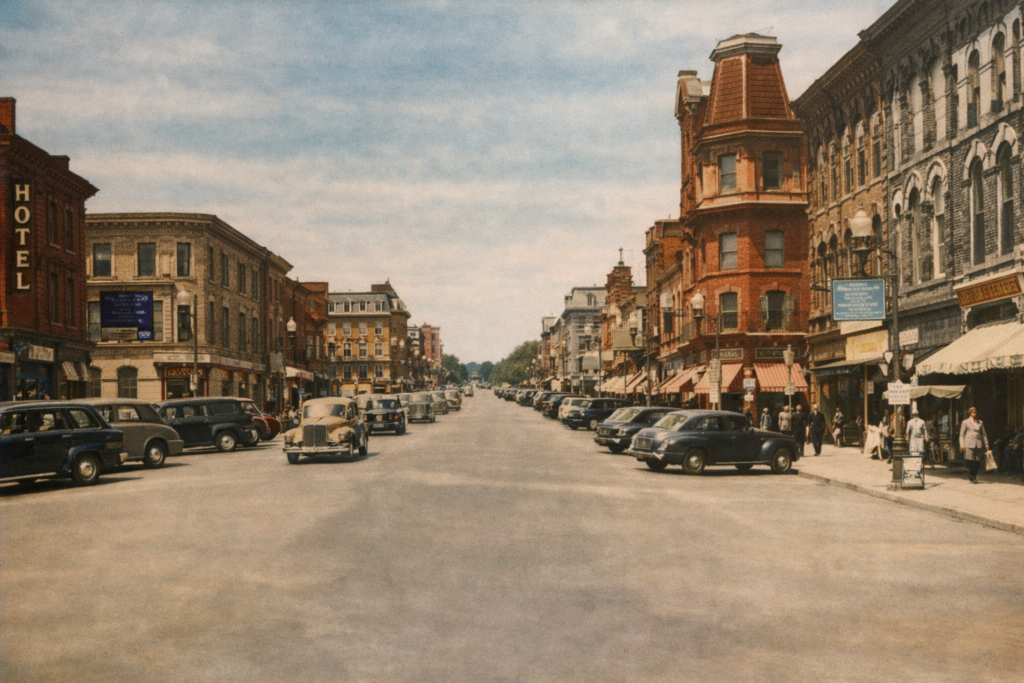
A deep historical portrait of Catholic Hill and its crown, Guelph’s skyline is defined by stone and light—the twin towers and great rose window of the Church of Our Lady, now the Basilica of Our Lady Immaculate. For nearly two centuries, that hill has carried not just a building, but the ambitions, faith, and memory of a city.
Catholic Hill before the stone: Galt’s vision and Macdonell’s influence
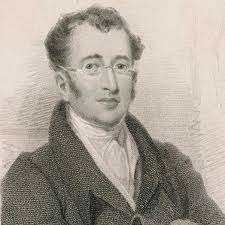
When John Galt founded Guelph on April 23, 1827, he did something unusually deliberate with the town’s geography: he reserved the highest central hill for the Roman Catholic Church. This was not a casual gesture. Galt was close to Bishop Alexander Macdonell, the first Roman Catholic bishop in Upper Canada, who had advised him in the formation of the Canada Company. As a tribute, Galt set aside the hill “in compliment to my friend, Bishop Macdonell.”
Galt later wrote that “a beautiful central hill was reserved for the Catholics,” and local tradition preserves an even bolder sentiment attached to the land transfer—that “on this hill would one day rise a church to rival St. Peter’s in Rome.”
A road was cut up the slope and named Macdonell Street, fixing the bishop’s name into the city’s daily life. From the very beginning, Catholic Hill was not just a parcel of land; it was a promise that the Catholic presence in Guelph would be visible, central, and architecturally significant.
The earliest Catholic community: cabins, schoolhouses, and a wooden church
Mass before there was a church
In 1827, there was no church, no rectory, and no parish infrastructure—only a small, scattered Catholic population, largely Irish and poor. The first known Mass in Guelph was celebrated on August 26, 1827, by Father Campion, a military chaplain based at Niagara who was responsible for Catholics across much of what is now western Ontario. He said Mass in the log cabin of John Owen Lynch, an Irish blacksmith brought from New York to serve the new settlement. That same day, Campion also celebrated Guelph’s first Catholic wedding, uniting Christopher Keogh—one of Galt’s workmen—and Ann Green.
For several years, Mass rotated through makeshift spaces. Until 1831, it was held in Lynch’s home; afterward, in a shared schoolhouse used on Sundays by Methodists and Presbyterians as well. Priests such as Father Cullen and Father Cassidy served Guelph from other centres, visiting only occasionally. The Catholic community existed more as a circuit stop than a fully formed parish.
St. Patrick’s: the first church on the hill
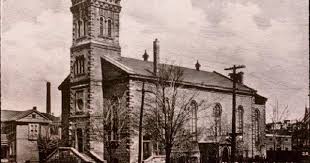
By 1835, the Catholics of Guelph had their first dedicated church on Catholic Hill: a framed wooden structure named St. Patrick’s. It was notable in the young town as the first building painted both inside and out, a small but telling sign of pride and permanence.
St. Patrick’s served a modest, struggling community. The congregation was largely Irish, many of them labourers and settlers with limited means. Yet they had secured the hill and raised a visible symbol of their faith over the town. That first church, however, was short-lived. On October 10, 1844, St. Patrick’s burned to the ground, erasing the community’s first major investment in stone and timber.
St. Bartholomew’s: rebuilding and growing ambition
A second church on Catholic Hill
The loss of St. Patrick’s did not end Catholic worship on the hill. Almost immediately, plans were made for a new church. Construction began on St. Bartholomew’s, which was completed in 1846. The cornerstone bore a Latin inscription: “To God, the best and greatest,” a phrase that framed the building as an offering of gratitude and aspiration rather than mere utility.
St. Bartholomew’s was more substantial than its wooden predecessor, but it was still modest compared to what Galt had imagined for the site. As Guelph grew, so did the Catholic population and its sense that Catholic Hill should hold something architecturally worthy of the city’s central vantage point.
Early dreams of a grander church
By the 1860s, the parish was already thinking beyond St. Bartholomew’s. In 1863, plans were drawn up for a much larger and more ambitious church, and a foundation stone was laid. But the project proved too grand for the resources then available, and it stalled.
This aborted attempt is important historically: it shows that the desire for a monumental church on Catholic Hill predates the eventual design by Joseph Connolly. The community’s ambition was already outgrowing its buildings, and the hill was waiting for a structure that matched the scale of Galt’s original vision.
Joseph Connolly and the birth of the present church
Choosing an architect
The turning point came with the selection of Joseph Connolly, an Irish-born architect who would become the principal designer of Roman Catholic churches in late nineteenth-century Ontario. Connolly was steeped in the Gothic Revival tradition and had a particular gift for large, expressive ecclesiastical buildings.
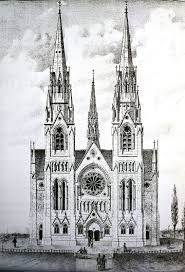
For Guelph, he conceived a High Victorian Gothic Revival church that would dominate the skyline and embody the international Gothic movement then reshaping Catholic architecture across the English-speaking world. Parks Canada later described Our Lady of the Immaculate Conception as “an exceptional example of the High Victorian Gothic Revival style,” noting that its design drew on the medieval cathedrals of France.
Groundbreaking and early construction
The sod for the new Church of Our Lady was turned on July 10, 1876. By November of that year, local newspapers were already reporting rapid progress: the entire basement at the rear, rising 14 feet, had been completed, and the walls were beginning to give the public “some idea of what architectural beauty the edifice will be when completed.”
The foundation stone was laid on July 5, 1877, by Monsignor Conroy, Bishop of Ardagh and Clonmacnois and Apostolic Delegate to the Dominion of Canada. The Guelph Mercury and Advertiser noted that the building, “now rearing its head above all other edifices in town, will be an architectural ornament to and a standing monument of the liberality and enterprise of the Roman Catholic citizens.”
The financial scale was significant for a nineteenth-century parish: about $10,000 had been spent in 1876, another $30,000 in 1877, and an estimated $60,000 more would be required to complete the project.
Interruptions and completion
Construction did not proceed in a straight line. After the initial push, work slowed and then paused, reflecting the financial and logistical challenges of such a large undertaking. The nave construction resumed in 1885, and the church was finally ready—though not fully finished—for consecration on October 10, 1888. At that point, the main body of the church was complete, but the towers remained without their intended superstructures.
The twin towers, which now define the façade, were not erected until 1925–1926, and even then they were completed without the tall spires Connolly had originally envisioned. The result is a powerful, twin-towered front that still feels monumental, even in its slightly truncated form.
Architecture: High Victorian Gothic on Catholic Hill
Exterior form and international influences
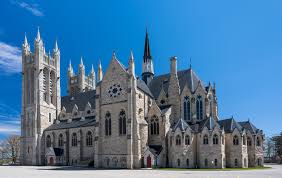
The Church of Our Lady is a textbook example of High Victorian Gothic Revival, a phase of Gothic architecture that allowed architects to draw from a wide range of medieval precedents while maintaining structural and compositional discipline.
Key features include:
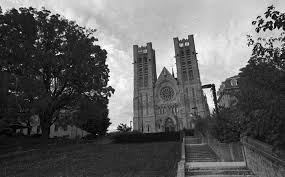
- Twin towers: The façade is dominated by two massive towers flanking the central entrance, a motif that recalls major European cathedrals. Some sources emphasize the influence of Cologne Cathedral, with its twin towers and strong vertical emphasis; others highlight the broader French Gothic inspiration evident in the apse and radiating chapels.
- Large rose window: The great circular window above the main portal is both a structural and symbolic focal point, flooding the nave with coloured light and anchoring the façade visually.
- Pointed windows and tracery: Lancet and traceried windows line the nave and transepts, reinforcing the vertical rhythm and allowing for extensive stained glass.
- Polygonal apse with radiating chapels: At the east end, the church terminates in a polygonal apse surrounded by chapels that radiate outward, a plan form closely associated with French Gothic cathedrals.
Constructed of stone and set on the brow of Catholic Hill, the church commands views over downtown Guelph. Parks Canada notes that it was conceived as the centrepiece of a larger complex of Roman Catholic religious and educational buildings, reinforcing its role as both spiritual and urban anchor.
Interior space and craftsmanship
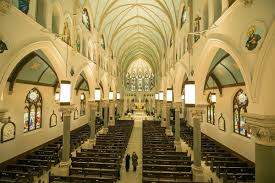
Inside, the church continues the Gothic vocabulary with ribbed vaults, clustered columns, and a clear axial progression from nave to sanctuary. The interior plan emphasizes processional movement toward the high altar, framed by the apse and its chapels.
The building is also notable for its decorative program. Contemporary and later accounts highlight:
- Carved stone and wood: Decorative carving throughout the church was executed by skilled craftsmen, adding layers of iconography and texture to capitals, altars, and furnishings.
- Stained glass: The windows, including the rose, are filled with stained glass that filters light into rich colour, reinforcing the sense of sacred space and connecting the parish to the broader Catholic visual tradition.
Connolly’s design is often regarded as his masterpiece, the fullest expression of his ability to translate European Gothic ideals into a Canadian context.
Parish life and the Catholic presence in Guelph
From its earliest days, the parish on Catholic Hill has been more than a building; it has been a hub of Catholic life in Guelph.
- Early pastoral care: In the 1820s and 1830s, priests like Father Campion, Father Cullen, and Father Cassidy served Guelph as part of wider missionary circuits, linking the town to a broader network of Catholic communities across Upper Canada.
- Growth of the congregation: Over time, the parish grew from a small, mostly Irish community into a large, diverse congregation. Today, the Basilica of Our Lady serves roughly 2,600 families and is one of 122 parishes in the Diocese of Hamilton.
- Educational and social role: The church was conceived as the centre of a complex that included schools and other institutions, embedding Catholic education and social life into the fabric of the city. The influence of Bishop Macdonell is still remembered not only in the hill and street that bear his name, but also in institutions like Bishop Macdonell High School.
The church’s elevated site has always made it a landmark, but its parish life—baptisms, funerals, processions, missions, and daily Mass—has woven it into the personal histories of generations of Guelph residents.
Recognition, restoration, and elevation to basilica
National Historic Site designation
In 1990, the Government of Canada designated Our Lady of the Immaculate Conception a National Historic Site. The designation cited the church as “an exceptional example of the High Victorian Gothic Revival style in Canadian architecture,” emphasizing its international architectural context and its role as a major work by Joseph Connolly.
The official description highlights:
- The twin-towered façade
- The large rose window
- The pointed windows
- The polygonal apse with radiating chapels
- Its prominent siting on the brow of the hill overlooking the city centre
Restoration in the late twentieth and early twenty-first centuries
As with many nineteenth-century stone churches, time and weather took their toll. Extensive restoration work—structural, exterior, and interior—was undertaken, culminating in a major campaign completed in the 2010s at a cost reported to be over $12 million. This work stabilized the fabric, renewed the interior, and ensured that the building could continue to function as both parish church and heritage landmark.
Elevation to a minor basilica
On December 8, 2014, Pope Francis elevated the Church of Our Lady of the Immaculate Conception to the status of a minor basilica, under the title Basilica of Our Lady Immaculate. This designation recognized not only the building’s architectural significance but also its importance in the liturgical and pastoral life of the Diocese of Hamilton.
A basilica is granted certain liturgical privileges and is seen as a church of particular importance in its region. For Guelph, the title formalized what residents had long felt: that the church on Catholic Hill is not just another parish, but a spiritual and cultural anchor.
The Church of Our Lady in Guelph’s historical imagination
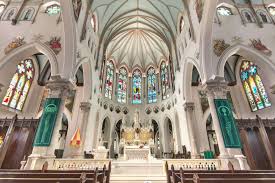
From Galt’s early remark about a church to rival St. Peter’s, to the first Mass in a blacksmith’s cabin, to the burning of St. Patrick’s and the building of St. Bartholomew’s, the story of the Church of Our Lady is a story of persistence and escalation—each generation pushing the vision further.
Connolly’s great Gothic Revival church finally matched the ambition embedded in the hill itself. Its towers, rose window, and radiating chapels translate European medieval forms into a distinctly Canadian setting, overlooking a city that grew up around it. The National Historic Site designation and basilica status simply put official language to what the skyline already says: this is a place where architecture, faith, and civic identity meet.