The Complete History of Guelph’s Most Famous Brewing Dynasty
A Historic Guelph Feature Article
Few Guelph stories blend craftsmanship, politics, rebellion, scandal, collapse, and resurrection quite like the saga of the Sleeman family. Their name is woven into the city’s identity — from 19th‑century industrial growth to prohibition‑era intrigue, to a modern brewing empire with international reach. What follows is the full, authoritative history of Sleeman Brewery, grounded in archival research and the most reliable historical sources available.
1. Origins in England and Arrival in Upper Canada (1830s–1840s)
The Sleeman story begins with John H. Sleeman, born in Cornwall, England in 1805. Like many ambitious tradesmen of the era, he saw opportunity in the growing towns of Upper Canada. He arrived in 1834 and quickly entered the brewing trade, founding the Stamford Spring Brewery in St. David’s (Niagara region) in 1836. Wikipedia
But it was his move to Guelph in 1847 that would shape the next two centuries of brewing history. Guelph’s clean water supply — famously tested by sending samples back to England — made it an ideal brewing location. Open Library Publishing Platform
2. The Birth of Silver Creek Brewery (1851)
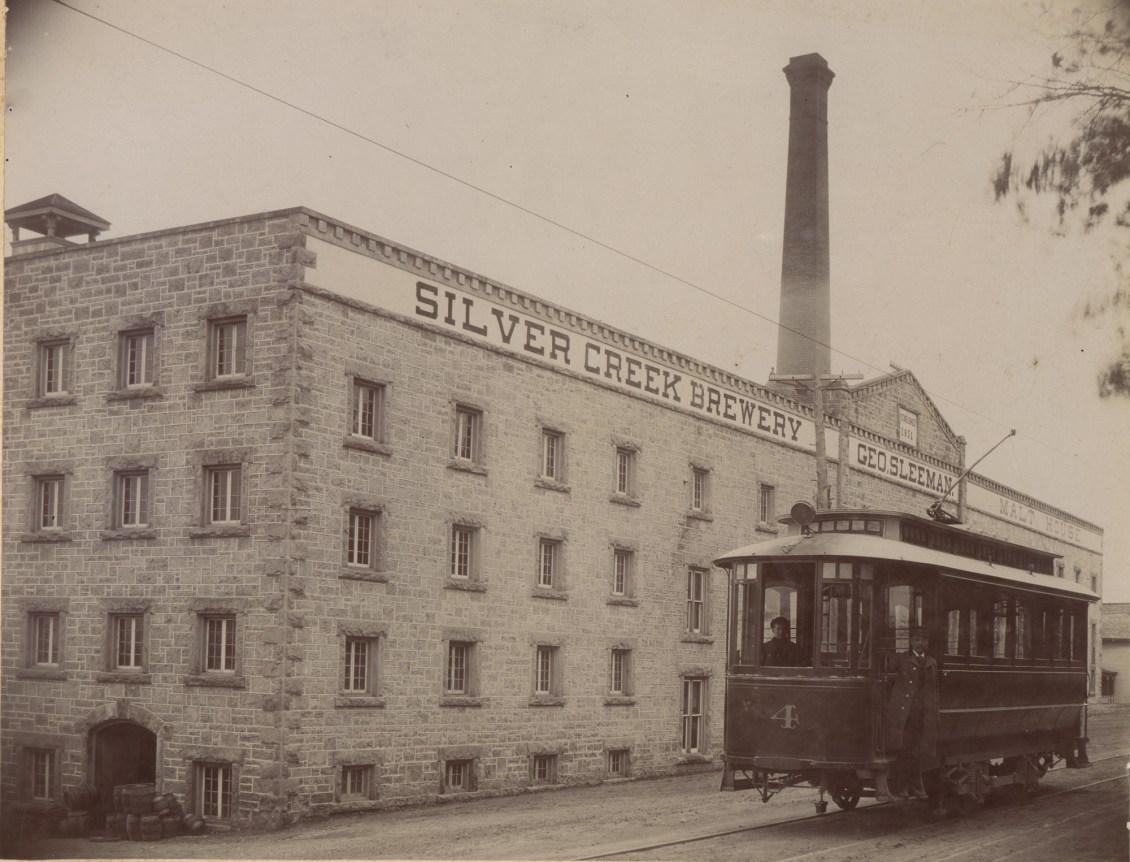
In 1851, John H. Sleeman opened what would become the family’s flagship operation:
Silver Creek Brewery, located near Waterloo Avenue and the Speed River.
This site became the heart of Sleeman brewing for generations. The brewery produced small 100‑barrel batches, but its reputation grew quickly thanks to the purity of Guelph’s water and the family’s meticulous brewing methods. Sleeman
3. George Sleeman: Expansion, Innovation, and Civic Leadership (1859–1900s)
John’s son, George Sleeman, joined the business in 1859 and became a partner in 1865. Under George’s leadership, Silver Creek Brewery expanded aggressively across Ontario and Quebec. By the 1890s, it was one of the region’s most successful breweries. Wikipedia
George was more than a brewer — he was a visionary civic leader:
- Mayor of Guelph (1880–1881)
- Builder of the Guelph Street Railway Company
- A paternalistic employer who shaped local working‑class culture
- A central figure in Guelph’s industrial rise in the late 19th century guelphhistoricalsociety.ca
However, his heavy investments in the street railway overextended his finances. In 1905, the banks seized his assets — including the brewery — though he managed to buy it back a year later. Wikipedia
4. The Legendary Sleeman Recipe Book (1898)
George’s son, George A. Sleeman, apprenticed in the brewery and in 1898 completed the now‑famous Sleeman Family Recipe Book — a leather‑bound manual containing the formulas for Sleeman Cream Ale and other signature beers. This book would become the key to the brewery’s resurrection nearly a century later. Sleeman
5. Prohibition and the Brewing Crisis (1916–1920)
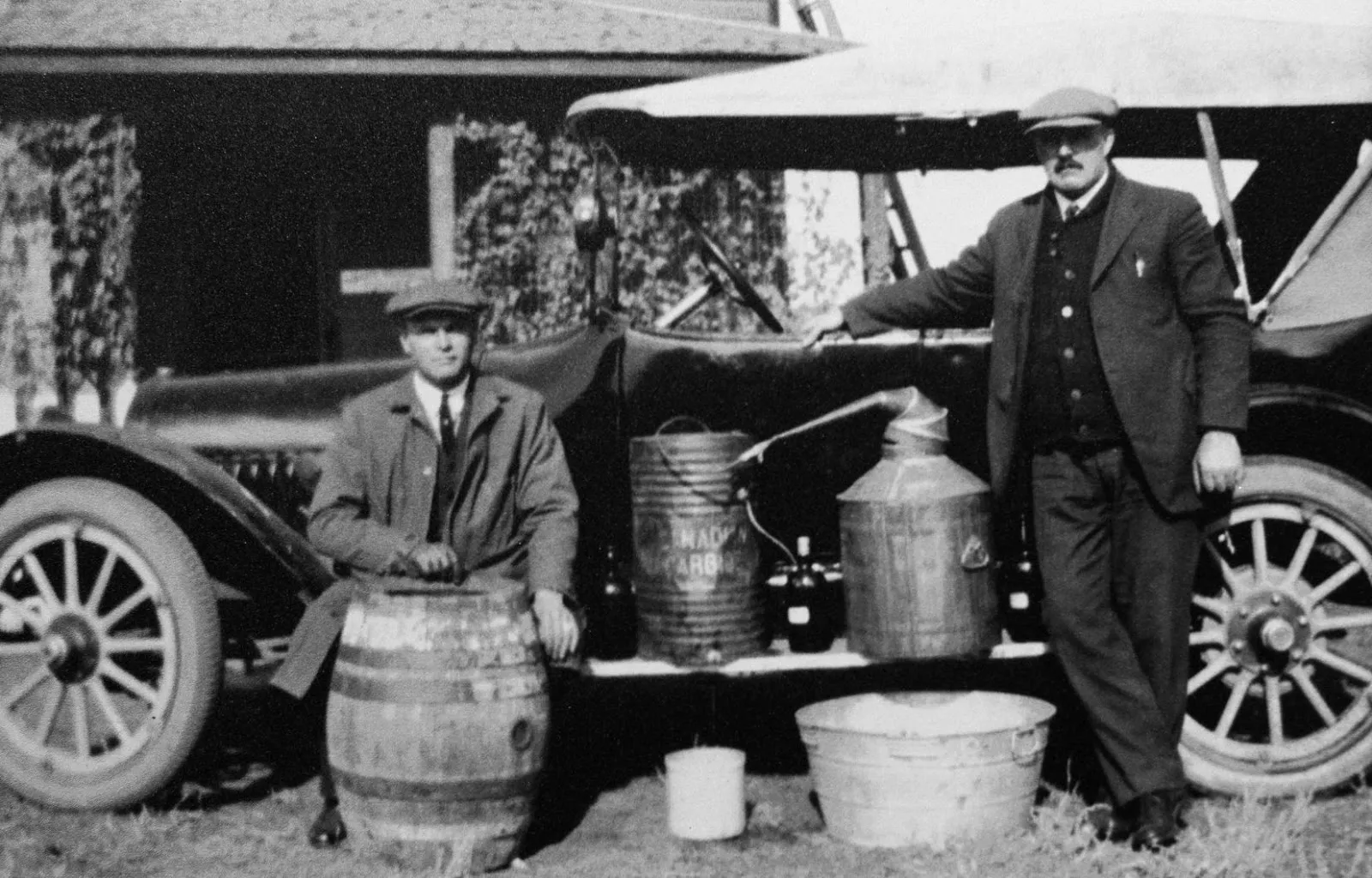
Ontario enacted prohibition in 1916 under the Ontario Temperance Act, eliminating the domestic market for beer. However, breweries were still allowed to produce beer for export, and the Sleemans continued shipping to the United States — legally at first. Wikipedia
Everything changed in 1920 when the U.S. enacted the Volstead Act, banning alcohol nationwide. Suddenly, the only way to supply American demand was through smuggling.
6. The Bootlegging Years: Fact vs. Myth (1920s)
This is the most controversial chapter in Sleeman history — and the most mythologized.
The Myth:
Sleeman beer was smuggled to Chicago and enjoyed by Al Capone, who allegedly visited Guelph and stayed at the Albion Hotel. This story has been repeated in advertising campaigns and popular lore.
The Reality:
Archival research shows the truth is more nuanced:
- Sleeman beer was sold to smugglers who transported alcohol into the U.S. during Prohibition.
- This was common among Canadian breweries at the time.
- The Capone connection is historically exaggerated; the more likely figure involved was Rocco Perri, the notorious bootlegger from St. Catharines.
- Evidence from the Royal Commission on Customs and Excise (1926) shows Sleeman involvement in smuggling and tax evasion, but not direct ties to Capone. guelphhistoricalsociety.ca
Still, the smuggling era became a defining part of the Sleeman legend — one that would later be used in marketing campaigns.
7. Collapse and the 50‑Year Ban (1933)
In 1933, the Canadian government charged the Sleeman family with:
- Smuggling
- Tax evasion
- Failure to report export volumes
The penalty was severe:
The Sleeman family was banned from brewing for 50 years.
The brewery was forced to close, and the family exited the industry entirely. Sleeman
This marked the end of the original Sleeman brewing dynasty.
8. Dormancy and Preservation (1933–1980s)
For half a century, the Sleeman name disappeared from the Canadian beer market. But the family preserved two priceless artifacts:
- The Sleeman Recipe Book (1898)
- A surviving clear glass Sleeman bottle, a family trademark
These heirlooms would become the seeds of a remarkable revival.
9. The Rebirth: John W. Sleeman and the 1988 Revival
In the 1980s, John W. Sleeman, great‑great‑grandson of the original founder, was given the recipe book and bottle by his aunt. Inspired, he decided to resurrect the family brewery.
1988: Sleeman Brewing and Malting Company is reborn in Guelph.
Using the original recipes, John W. Sleeman rebuilt the brand from scratch. Within a decade, Sleeman became one of Canada’s fastest‑growing breweries. Sleeman
10. National Expansion (1990s–2000s)
Sleeman grew rapidly through acquisitions:
- 1996: Okanagan Spring Brewery (BC)
- 1998: Upper Canada Brewing Company (ON)
- 1999: Canadian rights to Stroh’s brands
- 2004: Unibroue (QC), one of Canada’s most celebrated craft breweries
- 2019: Wild Rose Brewery (AB) Sleeman
Sleeman also brewed Sapporo for export markets starting in 2002.
11. The Sapporo Era (2006–Present)
In 2006, Sapporo Breweries of Japan purchased Sleeman for $400 million, making it part of a global brewing family. Sleeman remains headquartered in Guelph and is now:
Canada’s third‑largest national brewer.
It produces:
- Sleeman Cream Ale
- Sleeman Honey Brown
- Sleeman Original Draught
- Okanagan Spring brands
- Unibroue brands
- Sapporo (contract brewing)
- Old Milwaukee & Pabst Blue Ribbon (distribution) Wikipedia
Despite its size, Sleeman continues to market itself as a family‑rooted, heritage‑driven brewery — a narrative grounded in real history.
12. Sleeman Today: Legacy, Identity, and Guelph’s Pride
Today, Sleeman is a symbol of:
- Guelph’s industrial heritage
- Five generations of brewing tradition
- A story of downfall and redemption
- A global brand with local roots
The clear glass bottle, the recipe book, and the smuggling legend remain central to its identity — part history, part myth, all unmistakably Guelph.